|
You are here: Home: LCU 3 | 2005 : Editor's Note
 |
|
 |
| Editor’s Note |
|
|
| Same question; very different answer |
March 4, 2004
DR LOVE: What, in general, is your clinical approach to first-line therapy for Stage IV non-small cell lung cancer in younger patients with good performance status?
DR LILENBAUM: I use a platinum-based regimen — usually a carboplatin doublet — even though there may be a slight efficacy advantage for cisplatin.
April 13, 2005
DR LOVE: What, in general, is your clinical approach to first-line therapy for Stage IV non-small cell lung cancer in younger patients with good performance status?
DR LILENBAUM: In the past, I have used platinum-based doublets, and at this point, I would combine this with bevacizumab. Because of potential bleeding complications, I am more likely to use a taxane rather than gemcitabine with carboplatin/bevacizumab.
Most patients will finish chemotherapy and continue on bevacizumab, and eventually the disease will progress. At that point, the question is: Do you consider adding erlotinib to the bevacizumab as a promising second-line intervention? And my answer to that is, “Yes, I would.”
DR LOVE: What about patients with known EGFR mutations or those with mutation phenotypic characteristics, such as being a nonsmoker?
DR LILENBAUM: Based on Vince Miller’s data from the TRIBUTE trial, demonstrating a very impressive doubling of overall survival in nonsmokers who received erlotinib plus chemotherapy, for those patients, I would use four cycles of chemotherapy plus bevacizumab, and then stop the chemotherapy and add in erlotinib. |
After years of stagnation, clinical research in non-small cell lung cancer is rapidly gaining momentum. The above conversations with Rogerio Lilenbaum capsulize the striking impact these research advances are having on daily patient care.
During the lung cancer oral sessions at this year’s ASCO meeting, I was happy to observe that there were fewer monotonous presentations of Stage IV chemo comparison trials and many more encouraging and innovative research approaches to this disease.
Of course, topping the list was Alan Sandler’s blockbuster presentation of ECOG-E4599, demonstrating a survival advantage when bevacizumab was added to carbo/paclitaxel as first-line therapy for Stage IV non-small cell disease. Alan is interviewed on this issue of Lung Cancer Update, and his simple conclusion delivered to the multitudinous throng in Orlando left no doubt as to how he and ECOG interpret these data:
“To conclude, bevacizumab improves survival when added to paclitaxel/carboplatin chemotherapy in patients with nonsquamous non-small cell lung cancer. Bevacizumab also improves response rate and progression-free survival. Bevacizumab is associated with a small increase in serious bleeding, including hemoptysis. PCB (paclitaxel, carboplatinum, bevacizumab) is now the ECOG reference standard for the firstline treatment of advanced nonsquamous non-small cell lung cancer. Future plans include combining bevacizumab with chemotherapy and radiotherapy in locally advanced disease, combining bevacizumab with other targeted agents, and considering the use of bevacizumab with chemotherapy in either the neoadjuvant or adjuvant settings in the hopes of curing even more lung cancer patients.”
— Alan Sandler, MD, 2005 ASCO meeting plenary session |
In his interview for this issue, Rogerio Lilenbaum describes two patients he treated on E4599, both of whom experienced rapid and complete tumor responses to PCB. In the first patient, treatment resulted in a near vaporization of the tumor, which unfortunately led to fatal hemoptysis. With that experience in mind, when Rogerio observed a cavitary response to treatment in the second patient, he stopped therapy with Alan’s input and support. Eighteen months later, this patient now continues off all treatment without disease progression.
There were also multiple ASCO presentations, posters and seminars on the correlations between the presence of EGFR mutations and tumor responses to tyrosine kinase inhibitors. Listening to paper after paper on this fascinating phenomenon, it was difficult for me to grasp that the very first data report about this mutation was published in the spring of 2004.
The 2005 ASCO meeting also marked the transition from gefitinib to erlotinib as the preferred tyrosine kinase inhibitor for non-small cell lung cancer. This important shift also occurred within an accelerated timeline that began in 2004 with Frances Shepherd’s ASCO presentation of CAN-NCIC-BR21 demonstrating a survival advantage to erlotinib versus best supportive care.
This unexpected data set was then followed by a report in December 2004 demonstrating a disappointing lack of similar benefit with gefitinib in the ISEL trial. The final “nail in the coffin” for gefitinib came with Karen Kelly’s ASCO presentation on the results of SWOG-S0023, which again demonstrated a lack of survival benefit for the gefitinib versus control, this time as a maintenance treatment after chemo-radiation therapy for Stage III disease.
The changes in the algorithm for management of advanced non-small cell disease reflect a general acceleration of clinical research in lung cancer, and advances in adjuvant chemotherapy have similarly led to important changes in management of patients with early-stage disease. During the ASCO meeting, another major adjuvant study, the ANITA trial, demonstrated an advantage to treatment and the picture that has clearly emerged from the last three ASCO meetings is that the absolute benefit of this therapeutic strategy significantly exceeds what is seen in breast and colorectal cancer.
Our CME group has a dedicated computer server that warehouses thousands of hours of interviews and recording sessions. These chronicle what has, until recently, been the gradual evolution of cancer clinical research, but as is clearly evident in the two interviews with Rogerio Lilenbaum, the sudden increase in clinically relevant trial findings in lung cancer is part of an overall acceleration of progress that now provides more than a glimmer of optimism for the future.
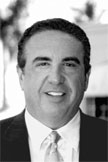
— Neil Love, MD
NLove@ResearchToPractice.net
Select publications
Douillard J et al. ANITA: Phase III adjuvant vinorelbine (N) and cisplatin (P) versus observation (OBS) in completely resected (stage I-III) non-small-cell lung cancer (NSCLC) patients (pts): Final results after 70-month median follow-up. On behalf of the Adjuvant Navelbine International Trialist Association. Proc ASCO 2005;Abstract 7013.
Herbst RS et al. TRIBUTE — A phase III trial of erlotinib HCl (OSI-774) combined with carboplatin and paclitaxel (CP) chemotherapy in advanced non-small cell lung cancer (NSCLC). Proc ASCO 2004;Abstract 7011.
Kelly K et al. Low incidence of pneumonitis on SWOG 0023: A preliminary analysis of an ongoing phase III trial of concurrent chemoradiotherapy followed by consolidation docetaxel and Iressa/placebo maintenance in patients with inoperable stage III non-small cell lung cancer. Proc ASCO 2005;Abstract 7058.
Miller VA et al. EGFR mutation, immunohistochemistry (IHC) and chromogenic in situ hybridization (CISH) as predictors of sensitivity to erlotinib and gefitinib in patients (pts) with NSCLC. Proc ASCO 2005;Abstract 7031.
Miller VA et al. Long survival of never smoking non-small cell lung cancer (NSCLC) patients (pts) treated with erlotinib HCl (OSI-774) and chemotherapy: Sub-group analysis of TRIBUTE. Proc ASCO 2004;Abstract 7061.
Sandler AB et al. Randomized phase II/III trial of paclitaxel (P) plus carboplatin (C) with or without bevacizumab (NSC # 704865) in patients with advanced non-squamous non-small cell lung cancer (NSCLC): An Eastern Cooperative Oncology Group (ECOG) Trial - E4599. Presentation. ASCO 2005;Abstract LBA4.
Shepherd FA et al. A randomized placebo-controlled trial of erlotinib in patients with advanced non-small cell lung cancer (NSCLC) following failure of 1st line or 2nd line chemotherapy. A National Cancer Institute of Canada Clinical Trials Group (NCIC CTG) trial. Proc ASCO 2004;Abstract 7022.
|
|